
How to Read a BTCPL Swatch Card: Shades, Count, Construction and Stock
Also called: swatch book, shade card, fabric sample card
Updated · By Srihari Bang
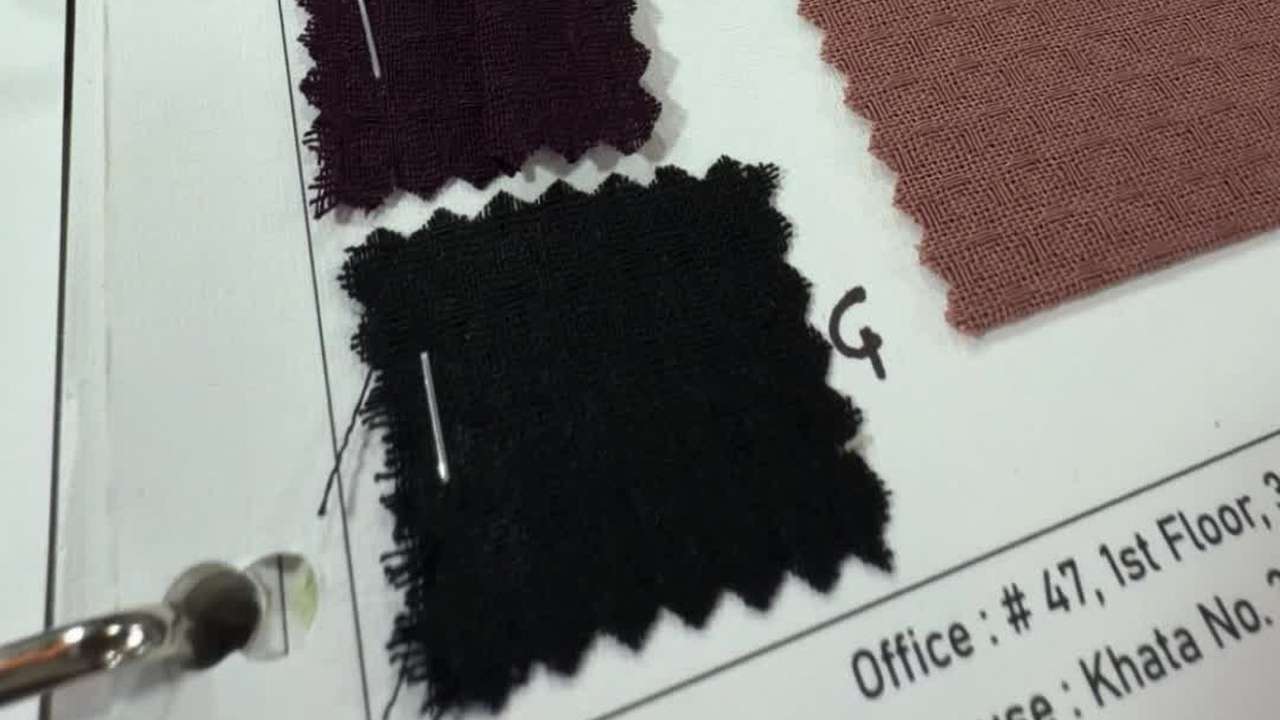
A page in a BTCPL swatch book is one design. A large swatch shows the base cloth and smaller pinned swatches lettered A to G show the other shades it is stocked in. The printed header gives the design number, count, construction, quantity and finish, and the design number is what you quote in an enquiry.
Key facts
| One page | One design, in every shade we stock |
|---|---|
| Large swatch | The base cloth, big enough to feel the hand and see the weave |
| Small swatches | The other shades, pinned and lettered A, B, C and onwards |
| Header | Design No, Count, Con (construction), Quantity, Finish, barcode |
| Footer | Office and warehouse addresses in Bengaluru |
What is on a swatch card?
Each page in our swatch books is one design. The large piece of cloth is the base shade, cut big enough to feel the hand and see the weave at arm's length. Down one side are smaller swatches of the same cloth in the other shades we stock, each pinned to the page and marked with a letter. The printed header at the top names the design and gives its count, construction, quantity and finish, with a barcode for our own stock system. The foot of the page carries the office and warehouse addresses, so a page that leaves the building still says where it came from.
Shade letters
The small swatches are lettered A, B, C and onwards down the page. A letter is only a shade code, and it means something only together with the design number. Quote both in an enquiry. A design can have a handful of shades or a full run to G and beyond, and the base shade shown large is one of them.
The header
The header repeats the fields you will find on a product page in our catalogue. Count is the fineness of the yarn, construction (printed as Con) is the warp ends and weft picks per inch, and finish is the treatment the cloth had after weaving. Those three are explained in how to read a woven fabric specification. Quantity is the stock on the day the card was printed. The catalogue page shows the live figure, because stock is updated continuously.
From the book to the catalogue
Type the design number from the header into the catalogue search and the product page comes up with its specification, the metres in stock and, for registered buyers, the photographs. A buyer who has the book in hand and the catalogue open can shortlist a season's fabrics without a visit.
At our stand
At a trade fair the books sit on the table and the sample garments hang behind them. Buyers go through the pages, pull a shade swatch to the light, and check it against a garment cut from the same cloth. Each sample garment carries a fabric-details tag with the same fields as the card, so the cloth, the shade and the spec can be matched on the spot.
Frequently asked questions
What do the letters next to the small swatches mean?
They are the shade codes for that design. Quote the design number and the letter together, for example 9072G with shade D, and we know exactly which cloth and colour you mean.
Is the large swatch a different fabric from the small ones?
No. It is the same design in its base shade, cut large so you can feel the weight and see the weave. The small swatches are the same cloth dyed in the other shades.
Is the quantity printed on the card the current stock?
It is the stock on the day the card was printed. The product page in our catalogue shows the metres available now, because stock is updated continuously.
Can I get a swatch sent to me?
Yes. Send an enquiry with the design number and the shade letter from the card, and we will cut swatches from the roll.
Sources
- Textile sample, Wikipedia (opens in a new tab) (read 2026-10-19)
- How to read a woven fabric specification, Bang Textiles (opens in a new tab) (read 2026-10-19)
Srihari Bang, Managing Director. Srihari Bang has been Managing Director of Bang Textiles & Clothing Pvt Ltd in Bengaluru since June 2023, after four years in new business development at Bang Polypacks in Mumbai. He studied family business management at SP Jain School of Global Management and holds a bachelor's degree from Christ University, Bangalore.
Looking for this fabric? Send an enquiry or browse the fabric catalogue.