
Yarn Count Explained: Ne, Nm, Tex and Denier on a Fabric Specification
Also called: cotton count, Ne count, yarn number, yarn fineness
Updated · By Srihari Bang
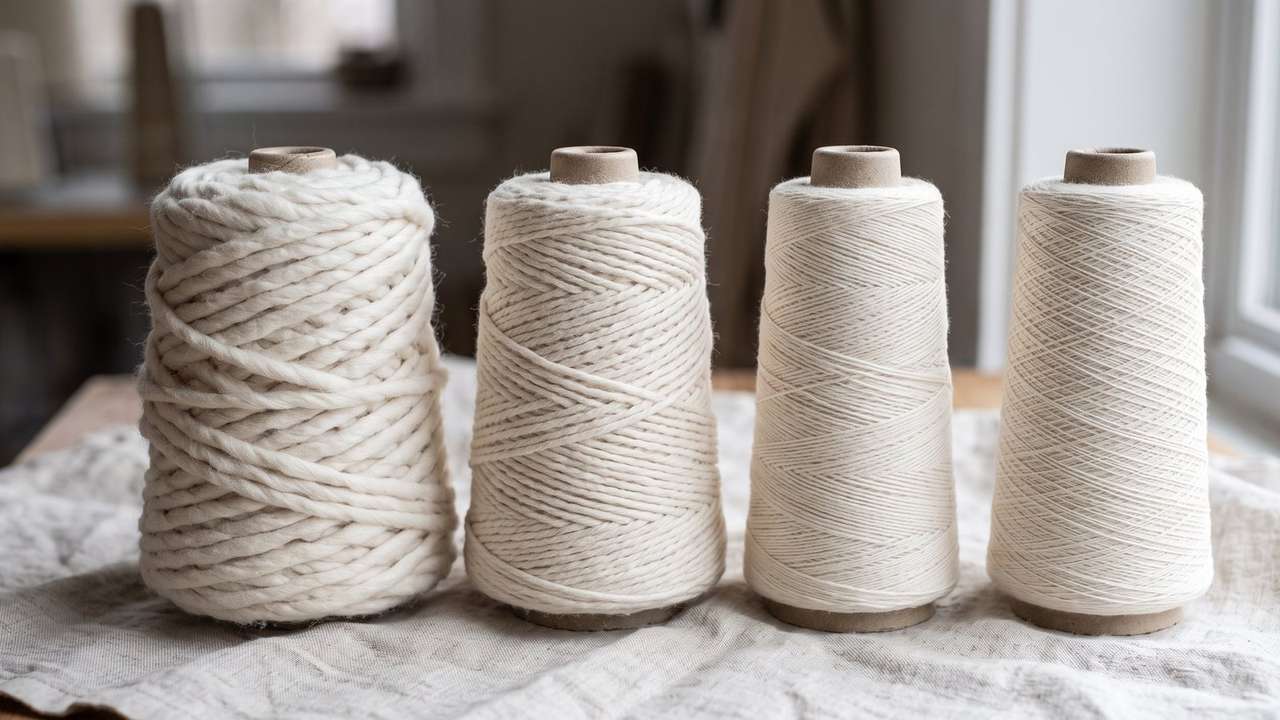
Yarn count is a number that states how fine a yarn is, either as length per unit of weight (Ne, Nm) or as weight per unit of length (tex, denier).
Yarn count tells you how fine a yarn is. Cotton is usually given in English cotton count (Ne), where a higher number means a finer yarn: a 40s yarn is finer than a 20s. Metric count (Nm) works the same way, while tex and denier run the other way, with a higher number meaning a thicker yarn.
Key facts
| Ne (English cotton count) | Number of 840-yard hanks in one pound. Higher is finer |
|---|---|
| Nm (metric count) | Metres of yarn per gram. Higher is finer. Nm = Ne × 1.693 |
| Tex | Grams per 1,000 metres. Higher is thicker. Tex = 590.5 ÷ Ne |
| Denier | Grams per 9,000 metres. Higher is thicker. Denier = 9 × tex |
| On our cards | Warp count × weft count, e.g. 20 x 20 on Piece Dyed Texture Dobby 9072G |
What is yarn count?
Yarn count is the number a spinner uses to say how fine a yarn is. There are two families of count, and they run in opposite directions. Indirect systems such as English cotton count and metric count measure length per unit of weight, so a finer yarn, which gives more length for the same weight, gets a higher number. Direct systems such as tex and denier measure weight per unit of length, so a finer yarn gets a lower number. The word "count" on a woven cotton spec almost always means English cotton count.
English cotton count (Ne)
English cotton count is the number of 840-yard hanks that weigh one pound. A 20s yarn gives twenty hanks to the pound and a 40s gives forty, so the 40s is half the weight for the same length and twice as fine. Written as 20s or 40s, and on a card as warp × weft, such as the 20 x 20 on our Piece Dyed Texture Dobby 9072G. Shirting cottons are commonly spun in the 40s to 80s range, and the heavier cloths for trousers and jackets in the 10s to 30s.
The other three count systems
Metric count (Nm) is the length in metres of one gram of yarn, so it rises with fineness like Ne and converts at Nm = Ne × 1.693. Tex is the weight in grams of 1,000 metres and denier the weight in grams of 9,000 metres, so both fall as the yarn gets finer, and denier is always nine times tex. European mills tend to quote Nm, laboratories quote tex, and filament yarns such as viscose and polyester are quoted in denier.
| Ne | Nm | Tex | Denier |
|---|---|---|---|
| 10s | 17 | 59 | 532 |
| 20s | 34 | 29.5 | 266 |
| 40s | 68 | 14.8 | 133 |
| 60s | 102 | 9.8 | 89 |
| 80s | 135 | 7.4 | 66 |
Plied yarns and blends
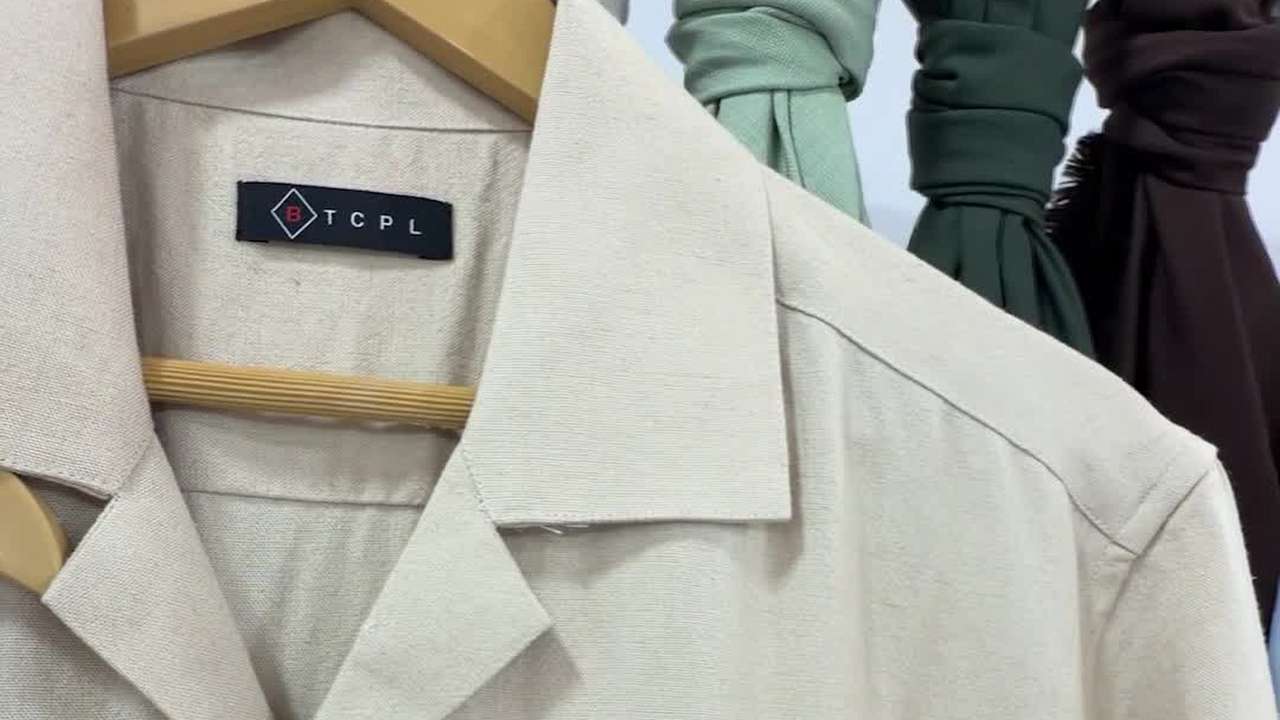
A single yarn is one strand. A plied yarn is two or more singles twisted together, written 60/2 or 2/60 for two 60s singles. The ply is roughly as thick as a 30s single but stronger and more even, which is why fine shirtings are often woven from two-ply yarn in the warp. On a blended cloth the count line still gives warp and weft the same way. The tag on our BTC-9112 sample garment, an 80% viscose and 20% linen cloth, reads 12 x 12.
Count and construction together
Count on its own does not say how dense the cloth is. That is the job of construction, the number of warp ends and weft picks per inch, and the two are read together. A 40s yarn at 132 x 72 is a fine, close poplin. The same 40s yarn at 60 x 50 is an open, light cloth. How count and construction combine into the weight and hand of a fabric is covered in how to read a woven fabric specification.
Frequently asked questions
Is a higher yarn count finer or coarser?
In Ne and Nm, finer. A 60s cotton yarn is finer than a 40s because more hanks of it go into a pound. In tex and denier, coarser, because those count the weight of a fixed length.
What does 20 x 20 mean on a fabric spec?
The warp yarn is 20s and the weft yarn is 20s, both in English cotton count. The first number is always the warp, the yarn that runs along the roll.
What does 60/2 or 2/60 mean?
A two-ply yarn made by twisting two 60s singles together. It behaves roughly like a 30s single in thickness, but is stronger and more even. Both ways of writing it mean the same thing.
How do I convert cotton count to tex?
Divide 590.5 by the Ne number. A 20s yarn is about 29.5 tex, a 40s about 14.8 tex, and a 60s about 9.8 tex.
Sources
- Units of textile measurement, Wikipedia (opens in a new tab) (read 2026-10-19)
Srihari Bang, Managing Director. Srihari Bang has been Managing Director of Bang Textiles & Clothing Pvt Ltd in Bengaluru since June 2023, after four years in new business development at Bang Polypacks in Mumbai. He studied family business management at SP Jain School of Global Management and holds a bachelor's degree from Christ University, Bangalore.
Looking for this fabric? Send an enquiry or browse the fabric catalogue.